In For The Cause
In For The Cause works toward a single outcome: ensure that persons with disabilities (PwDs) have the choice, income, and recognition they need to live independently in their own communities. We do this through four interconnected pillars:
Inkin
An ethical marketplace that turns skilled work into income for persons with intellectual disabilities, autism, cerebral palsy and multiple disabilities.
Awareness & Programs
Experiential workshops and initiatives that shift how disability is understood and valued in workplaces, schools, and communities.
Advisory Services
Accessibility audits (physical, digital & psychological spaces), D&I policy formulation and program audits.
NGO Platform
Santosh Jeevani National Award creates recognition and advocacy for outstanding work for self-advocates in the disability sector.
Our Impact

Producers with a route to their own income through Inkin

Partner NGOs across 5 cities

persons with disabilities reached since 2017, across 18 states

'Socks that make me Happy' distributed

Experiential workshops delivered

Corporate events, 10 corporate partners
Disability Awareness
Understanding the scale, the legal framework, and the tools we use to bridge the gap between policy and true inclusion.
Why Disability Matters
The 21 Disabilities Framework
Recognized explicitly under India's Rights of Persons with Disabilities Act (2016). This legal framework encompasses intellectual, developmental, visual, hearing, movement-related, and multiple disabilities.
Empowering through Skilled Independence
We help persons with disabilities move from dependence toward independent living by enabling them to earn from their own skilled work. This supports the choice, control and community inclusion set out in Article 19 of the UN Convention on the Rights of Persons with Disabilities.
Get StartedInkin Marketplace
Running Inkin, an online marketplace for products made by persons with disabilities.
Strategic Partners
Partnering with NGOs, corporates and academic institutions to create steady demand.
Building Awareness
Ensuring disability-made work is valued on its merit, not bought out of sympathy.
What We Do
INKIN: A Marketplace Empowering Creators with Disabilities
What is Inkin?
Inkin (inkin.store) is an online marketplace that sells products made by PwDs in verified NGO programmes focused on intellectual & developmental disabilities across India. The goal is to solve a specific problem: adults with disabilities finish years of skills training but have no trusted way to sell what they have made, leaving them dependent on their families and with no income of their own.
Inkin changes this by:
- Buying products directly from partner NGOs at fair prices, paying producers upfront
- Carrying inventory itself, so NGOs take no financial risk
- Selling to individual shoppers and corporate buyers across India
- Paying producers for their work, giving them income, choice, and recognition as skilled makers
How it works
For Producers & Partner NGOs
Partner NGOs apply through awarenessforinclusion.com and pass a structured onboarding check covering disability documentation, product quality, and ethical production standards. Once approved, each NGO receives a dedicated dashboard to list stock, manage orders, and receive real-time payment reports. Producers are trained in the skills that make products market-ready: quality standards, finishing, packaging, and customer communication. Payment is direct and upfront—there is no waiting or dependence on retail sales cycles.
For Buyers
Shoppers order through inkin.store from eight product categories: handcrafted goods, organic textiles, artisan foods, sensory products, accessories, upcycled goods, bespoke orders, and seasonal items. Corporate buyers place bulk gifting orders and co-branded campaigns, providing producers with steady demand volumes that individual retail alone cannot sustain.
The model: Why it works
- For producers: Income is their own. They earn from work they are skilled enough to produce, which builds independence and standing in their community—not charity, but contribution.
- For NGOs: A new income line without inventory risk. Partner organisations reach national markets they could never reach alone.
- For buyers: Verified ethical products. Every item is made by persons with disabilities in registered NGO programmes and meets environmental and quality standards.
- For Inkin: A self-sustaining social enterprise model. Inkin buys products upfront and resells with a margin of approximately 30%, which covers platform operations.
Statistics
282+
Producers
5
States
5
NGOs
Impact to date
- Operational since: 2025 (development and onboarding began 2022)
- Geographic reach: Pan-India across 5 states
- Delhi NCR & Gurugram (Haryana); Jaipur (Rajasthan); Kolkata (West Bengal); Kohima (Nagaland); Haldwani (Uttarakhand)
- Partner NGOs: 5 verified organisations
- Khushboo (Gurugram) — operational since 1995, 99 producers
- Approach Autism (Jaipur) — structured IDD programmes since 2011, 88 producers
- Able Fable (Kolkata) — adult livelihood programme, 26 producers
- Tabitha Enabling Society (Kohima) — 69 beneficiaries
- Rosni Society (Haldwani) — registry of 1,715 persons with disabilities
- Producer pool: 282 persons with disabilities with active livelihoods
- Disability categories: Autism, intellectual and developmental disabilities, learning disabilities, ADHD, cerebral palsy, multiple disabilities, hearing/speech/locomotor disabilities
How to engage
- As a producer or NGO: Apply at inforthecause.org (using Login link) or directly go to awarenessforinclusion.com and Register with disability documentation and product samples
- As a buyer: Browse and order at inkin.store
- As a corporate: Contact via inforthecause.org or inkin.store for bulk gifting, procurement, or co-branded campaigns
CASE STUDY
Socks That Make Me Happy
What it is
Inspired by John's Crazy Socks (US), Awareness Socks is a product-based awareness initiative. IFTC produces disability-themed socks—humorous, thoughtful, conversation-starting—while providing real employment to persons with disabilities across multiple roles. The socks are listed on inkin.store.
The employment model
IFTC designs and produces the socks; PwDs work across functions: design & ideation, inventory management, data entry & logistics, social media & marketing, sales & customer communication, product assembly & quality control.
The impact
- Raising awareness: Every person wearing the socks becomes an advocate and conversation-starter
- Creates real employment: Not volunteer opportunities or sheltered work, but jobs with pay and responsibility building independence.
The business model
IFTC procures the socks and holds inventory ensuring the NGOs and producers are paid upfront. Socks are sold through corporate bulk orders and individual purchase on inkin.store. 70% of sales proceeds go directly to disabled workers and partner organisations. Seasonal designs keep the product line fresh and engaging.
Awareness & Engagement Programs: Building understanding through direct experience
What we do
Rather than classroom lectures on “disabilities,” we create moments of direct engagement—immersive experiential workshops, stories that shift perspective, physical practices that reveal embodied difference. The goal is to break bias, build advocates, and create employment and economic opportunity for persons with disabilities.
All programs centre persons with disabilities as creators, teachers, and leaders—not subjects.
2.A. Canvas of Expression: Artistic workshops & creative collaboration
What it is
Canvas of Expression brings employees and corporate teams into creative workshops led by artists with disabilities. Participants work alongside people with disabilities artists to create something together—painting, collage, craft, textile work, mixed media.
The process
Corporate teams are paired with the artists from partner NGOs; teams work on a joint creative project with no prior art experience required. The process—not the product—is the point. Sessions conclude with reflection: What stereotypes did you hold? What surprised you?
What participants experience
- Immediate friendships form across disability and non-disability divides.
- Creative work becomes a medium to break down barriers and unconscious bias.
- Participants experience disabled artists as skilled, creative, and economically valuable.
- Sense of pride and shared accomplishment.
2.B. Twilight's Children: Storytelling to shift perspectives
What it is
Twilight's Children is a crowdsourced collection of stories across India, centered on intellectual and developmental disabilities. Stories are told by persons with disabilities, parents, educators, and allies—each offering perspective on lived experience, choice, family dynamics, work, and belonging.
How we use stories
IFTC organizes storytelling sessions with corporate teams, schools, and communities. Persons with disability storytellers share authentic 15–20 minute narratives (prepared but unscripted, real voices). Audience listens without analysis or “inspiration” framing. Reflection follows: What assumptions did you hold? What surprised you?
The impact
- Personal connection: Stories activate perspective in ways data cannot.
- Employees often share their own stories in return.
- Lasting shift: participants leave seeing persons with disabilities as whole people with agency, not objects of pity.
- Advocates created: people who hear stories become champions for inclusion in their own spheres.
Partnerships & reach
- Sheroes Virtual Community: 35,000+ members in “Moms Know-No Limits”—a safe space for mothers of children with disabilities.
- Schools: Storytelling sessions at Shriram Schools and other institutions.
- Published Stories: Compiled in accessible formats (video, audio, written, illustrated) for ongoing sharing.
CASE STUDY
Awareness Workshops & Storytelling Impact
The Model in Action
Each workshop and storytelling program is designed so persons with disabilities lead. Participants frequently share how their perspectives shift: initial hesitation gives way to connection, with art and story serving as the bridge.
Partnership Examples
- Sheroes Community: Building supportive networks for mothers and allies.
- Shriram Schools: Experiential inclusion sessions for students, parents, and teachers.
- IFTC Creative Labs: Onsite corporate workshops, ongoing collaborations, and accessible resource development.
Key Outcomes
- Reduced unconscious bias and stereotype-driven attitudes.
- Formation of authentic relationships and advocates for inclusion in varied environments.
- Demonstrable economic opportunities created for disabled facilitators and artists.
Stories and artworks from these programs are showcased in accessible digital galleries and publications, sustaining visibility and impact beyond a single session.
Advisory programs: Audits & policy formulation
What it is
For over a decade, In For The Cause has worked alongside persons with intellectual and developmental disabilities and a national network of partner organizations. Our Advisory Programs extend that lived experience to corporates and to private and public institutions that wish to move inclusion from intention to everyday practice. This is not a compliance exercise conducted from a distance; it is a dignity-centred advisory practice that examines whether an organization's spaces, systems, and policies genuinely welcome the people they are meant to serve. The offering covers:
- Accessibility audits across physical, digital, and psychological spaces — from the built environment and online platforms to the attitudes and psychological safety that determine whether a person feels able to participate
- Diversity and inclusion policy formulation grounded in the Rights of Persons with Disabilities Act, 2016 and the UN Convention on the Rights of Persons with Disabilities
- Program audits that test whether existing inclusion, CSR, or accessibility initiatives are delivering real outcomes rather than symbolic ones
How it works
Every engagement is scoped to the organization rather than delivered from a template, and each stage is reviewed through the lens of people with lived experience of disability. We begin by understanding your context, assess against recognized standards, and translate findings into recommendations your teams can act upon. A typical engagement moves through:
- Discovery and scoping conversations with leadership, staff, and, where relevant, the communities you serve
- On-site and digital assessment measured against established accessibility standards and reviewed by evaluators with lived experience
- A clear report with prioritized, practical recommendations
- Drafting or refinement of inclusion policies and redesign of programs where gaps are found
- Optional sensitization workshops and periodic review cycles to sustain progress
Impact delivered
Organizations that work with us gain more than a report; they gain a credible, defensible path to inclusion that holds up in practice. Our guidance helps them meet their legal obligations while building environments where persons with disabilities can contribute and remain. Clients can expect:
- Readiness against the obligations of the Rights of Persons with Disabilities Act, 2016 — including equal-opportunity and accessibility duties for private employers, and the four percent reservation applicable to government establishments
- Physical spaces and digital platforms that are genuinely usable, not merely marked as accessible
- Policies and programs that withstand scrutiny and translate into lived outcomes
- A workforce culture better prepared to welcome, include, and retain people of all abilities
CASE STUDY
Advisory Programs in Practice
The Model in Action
Each advisory engagement is led and reviewed by persons with lived experience of disability. We work shoulder-to-shoulder with your teams to evaluate, recommend, and help implement meaningful, practical steps to full accessibility and inclusion—beyond compliance, toward real belonging.
Engagement Examples
- Government and corporate accessibility audits across India.
- Formulation or revision of D&I policies for Fortune 500 and public sector organizations.
- Collaborative training and review workshops with persons with disabilities facilitating direct feedback.
Key Outcomes
- Roadmaps for organizations to exceed legal minimums and create authentic accessibility.
- Sustainable systems for regular review and update of inclusion commitments.
- Policies built on rights-based, dignity-centred frameworks.
Results include new accessible infrastructure, improved digital platforms, equitable HR practices, and culture shifts driven by both leadership and lived experience.
National Recognition Platform
About the Award
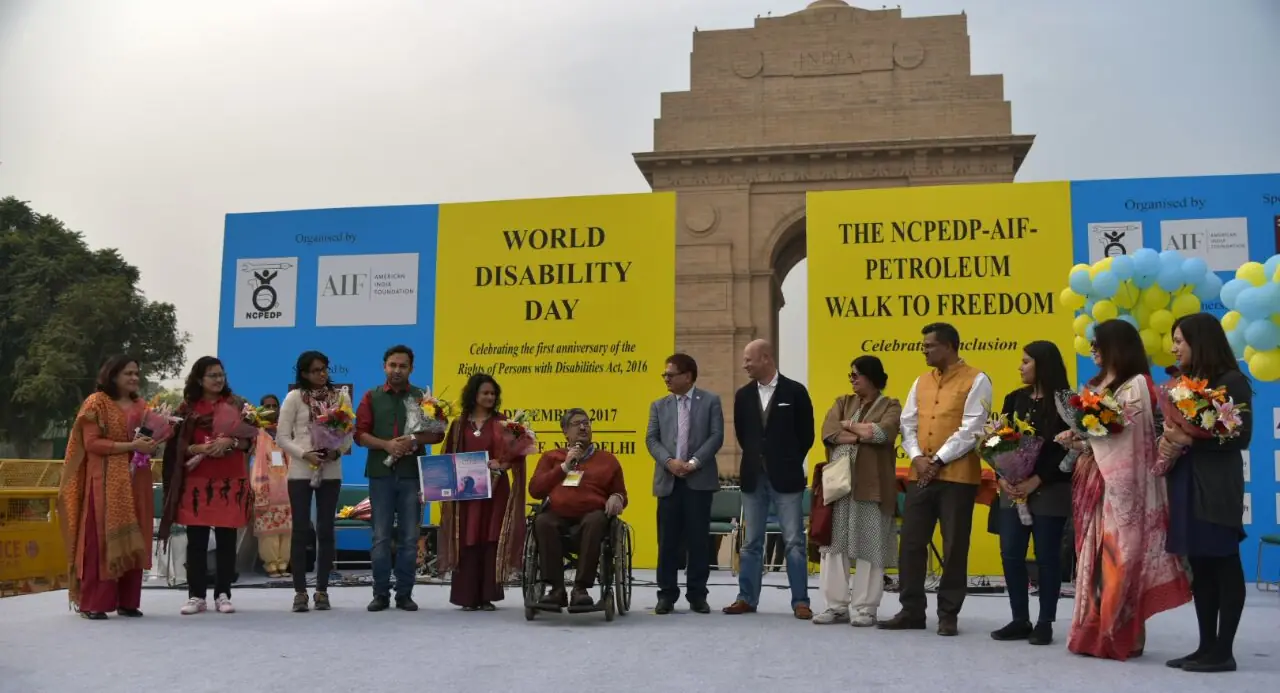
The Santosh Jeevani National Award honours outstanding contributions to disability rights, inclusion, and livelihoods across India. Named in memory of Santosh Gautam, the award reflects In For The Cause's commitment to recognizing organisations, educators, caregivers, and persons with disabilities who advance inclusion in their communities. The award is presented at Parivaar's National Parents' Meet each year.
Who is eligible
The award covers four categories consistent with the award's stated scope (contributions to the lives of persons with intellectual and developmental disabilities):
- Organisations/NGOs working in the IDD sector;
- Educators and caregivers who have advanced inclusion;
- Self-advocates and persons with disabilities themselves;
- Allied professionals or community navigators.
How does this help the overall goal
The award advances IFTC's overall goal in two ways:
- It surfaces and documents replicable models of good practice from across the IDD sector;
- It gives self-advocates and grassroots workers national visibility they would not otherwise receive.
2025 Award Winner
Mesenipong Pongen
Citation
Marketplace & Corporate Gifting
Inkin is our online marketplace for products made by persons with disabilities. We buy products from partner NGOs upfront, so makers are paid for their work, and present their goods as verified ethical, sustainable products — not charity.
Self-employment & independence
Inkin gives persons with intellectual and developmental disabilities a route to their own income, and the independence and recognition that come with it.
Eco-friendly materials
we use sustainable materials such as bamboo, beeswax and recycled paper.
Made by skilled makers
every item is crafted by persons with disabilities and sold on its merit.
Awareness range
Socks That Make Me Happy support 21 category of disabilities as the disability act of 2016 through a share of each sale.
What if every gift you bought for your child could also change someone's life?
I've known Madhavi and her NGO "In for The Cause" for many years now. She's been a tireless advocate and ally for people with disabilities, drawing deeply from her own powerful lived experiences. So when I learned she had started creating and curating products made by individuals with disabilities, I knew I had to support it.
I bought a few items—and not only were they beautiful and high-quality, but they also carried something more. Every time I use them, they bring a smile to my face because I know that my purchase helped someone on their path to independence.
Each product has a story. A story of resilience, grit, and determination. Every person Madhavi works with brings their own journey and strength into what they create.
As the festive season approaches, let's choose gifts that give back. Let's bring joy into our homes—and into someone else's life too.